Call us now :08045802246
 Send Inquiry
 Send Inquiry
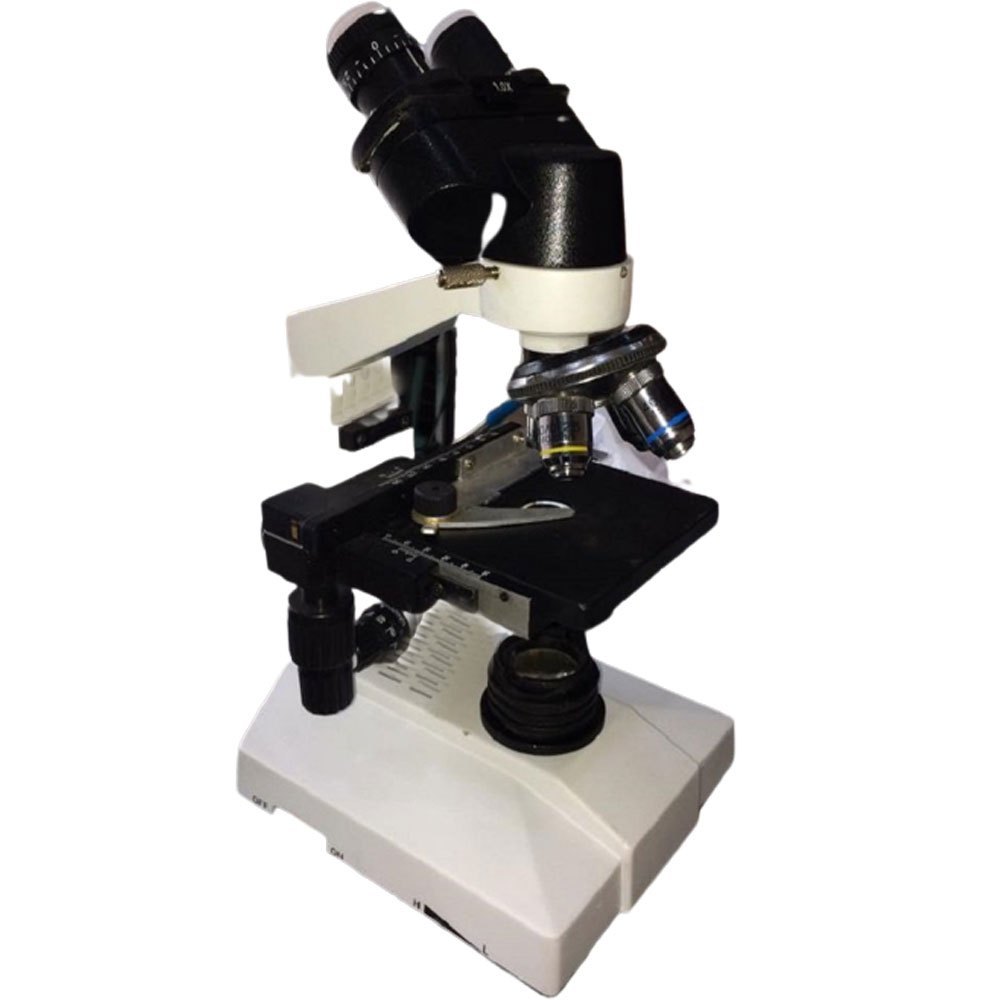
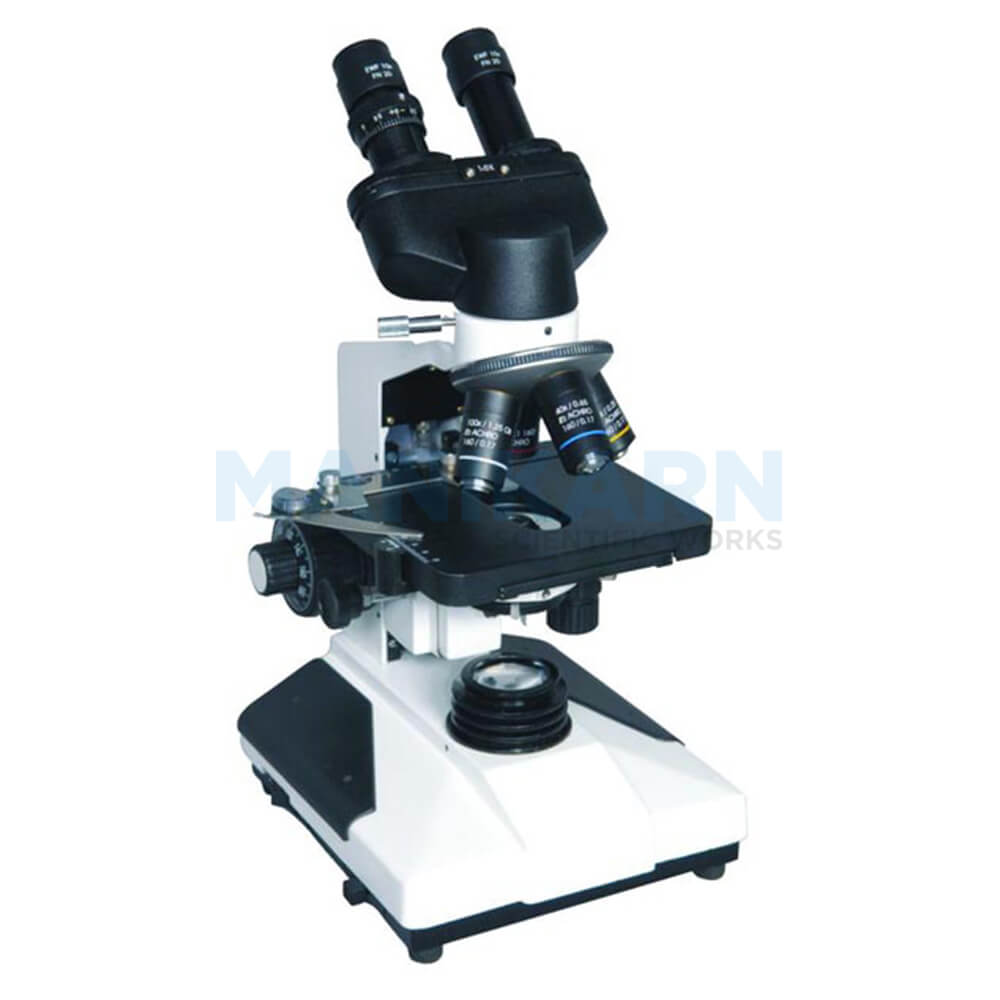
Binocular Microscope
Price 6000.0 INR/ Piece
MOQ : 1 Piece
Binocular Microscope Specification
- Usage
- Microscopic examination of biological samples, materials science, and education.
- Dimension (L*W*H)
- 300x200x450 Millimeter (mm)
- Weight
- 4-7 Kilograms (kg)
- Operate Method
- manual
- Product Type
- binocular microscope
- Material
- stainless steel
- Theory
- Other
- Drawtube
- Binocular
- Focal Distance
- 160mm Millimeter (mm)
- Magnification
- 40X-1000X
- Dimensions
- 300mm x 200mm x 450mm Millimeter (mm)
- Focus Range
- 15mm Millimeter (mm)
- Eyepieces
- WF10X/18mm
- Eyepiece Tube
- Binocular
- Illumination
- LED illumination
- Coarse Adjustment Range
- 30mm
- Fine Adjustment Range
- 0.002mm
- Working Stage
- Double layer mechanical stage 125mm x 115mm Square Millimeter (mm2)
- View Head
- 45 inclined binocular head 360 rotatable
- Interpupillary Distance
- 55mm 75mm Millimeter (mm)
- Objective Achromatic
- 4X 10X 40X 100X
- Condenser
- Abbe condenser with iris diaphragm
- Light Source
- LED
Binocular Microscope Trade Information
- Minimum Order Quantity
- 1 Piece
- Supply Ability
- 500 Pieces Per Year
- Delivery Time
- 1 Week
- Main Domestic Market
- All India
- Certifications
- CE CERTIFIED CO. NSIC MSME CERTIFIED ISO 9001:2015
About Binocular Microscope
Binocular Microscope
A binocular microscopes specifications includean infinite optical system with anti-reflective and anti-fungal coatings, a 30-degree inclined and 360-degree rotatable binocular head with diopter adjustment and a range of 48-75mm interpupillary distance, a quadruple nosepiece, standard objectives (4x, 10x, 40x, 100x oil immersion), a coaxial mechanical stage with a 75x50mm travel range, a condenser with iris diaphragm, an LED or halogen illuminator with brightness adjustment and a blue filter, and a robust, corrosion-proof stand.
Here are the key specifications for a binocular microscope:
Optical System & Components
- Optical System:Color-corrected infinity optical system.
- Coatings:Optical parts should have anti-reflective, anti-fungal, and anti-corrosion properties.
- Objectives:Standard objectives (e.g., 4x, 10x, 40x, 100x oil immersion) with appropriate numerical apertures, such as 10x/0.25, 5x/0.14.
- Eyepieces:Wide-field eyepieces with diopter adjustments for varying magnifications (e.g., 10x) and a specified field of view.
- Nosepiece:A reversed quadruple nosepiece.
Head & Viewing
- Binocular Head:Sidentopf-type 30-degree inclined binocular head that is 360-degree rotatable.
- Interpupillary Distance:Adjustable from 48mm to 75mm.
Stage & Focusing
-
Coaxial, low drive mechanical stage with a travel range of 75x50mm and a hard-coated surface.
-
Smooth, coaxial coarse and fine focusing mechanism with tension adjustment.
Illumination
- Light Source:Built-in, high-intensity LED illumination system with adjustable brightness.
- Condenser:An Abbe condenser with 1.25 numerical aperture, iris diaphragm, and a slot for filters.
- Filter:Includes a 45mm diameter blue filter.
Stand & Design
- Stand:Corrosion-proof, acid-proof, and stain-proof metallic construction.
- Storage:A storage box with a lock, key, and internal receptacles for accessories.
Versatile Magnification and Precision
The microscopes magnification range from 40X to 1000X supports detailed study of biological cells, microscopic organisms, and intricate material structures. Precision focusing is enabled through coarse (30mm) and fine (0.002mm) adjustments, meeting the diverse needs of researchers and educators alike.
Ergonomic and Adjustable Viewing Experience
Designed for user comfort, the binocular head is inclined at 45 and can rotate 360, allowing flexible positioning. The interpupillary distance is adjustable between 55mm and 75mm, making it suitable for varying viewer preferences and prolonged observation sessions.
Reliable and Energy-Efficient Illumination
Equipped with a bright, adjustable LED light source and an Abbe condenser featuring an iris diaphragm, the microscope offers excellent illumination, energy efficiency, and long service life. This system ensures high-contrast, clear images for every application.
FAQs of Binocular Microscope:
Q: How do you adjust the interpupillary distance on this binocular microscope?
A: The interpupillary distance can be adjusted between 55mm and 75mm by gently sliding the two eyepiece tubes closer or farther apart, ensuring a comfortable and clear view for each user.Q: What is the recommended process for focusing samples?
A: Begin by using the coarse adjustment knob to bring your specimen into the general focus range (30mm), then use the fine adjustment knob, which moves in increments as small as 0.002mm, for precise and sharp focusing.Q: When should the Abbe condenser and iris diaphragm be adjusted?
A: Adjust the Abbe condenser and iris diaphragm to optimize light intensity and contrast when switching between different magnification levels or working with specimens of varying transparency.Q: Where is this microscope commonly used?
A: This microscope is ideal for laboratory settings, educational institutions, research facilities, and materials science labs, making it suitable for both academic and professional environments.Q: How does the LED illumination benefit users compared to traditional lighting?
A: The LED illumination provides consistent, bright lighting with low power consumption, minimizing heat output and ensuring comfortable use over long observation periods.Q: What materials is the microscope made from, and what are the benefits?
A: Constructed from stainless steel, the microscope is robust, resistant to corrosion, and designed to deliver durable performance in demanding laboratory conditions.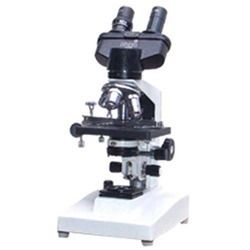
Tell us about your requirement

Price:
Quantity
Select Unit
- 50
- 100
- 200
- 250
- 500
- 1000+
Additional detail
Mobile number
Email

More Products in LABORATORY MICROSCOPE Category

Florescence Trinocular Microscope
Price 27000 INR / Piece
Minimum Order Quantity : 1 Piece
Light Source : High power LED with filter set (Blue excitation and barrier filters included)
Working Stage : Double layer mechanical stage, 140 x 135mm
Theory : Other, Florescence microscopy provides enhanced contrast for observing structures within specimens tagged with fluorescent markers.
Illumination : LED high intensity illumination with variable brightness
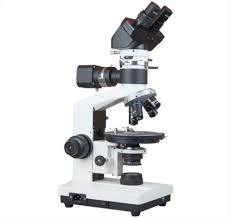
Research Polarizing Microscope
Price 22000 INR / Piece
Minimum Order Quantity : 1 Piece
Light Source : Halogen lamp 6V/20W or LED multiple intensity with external power supply
Working Stage : Rotatable circular stage, 360 graduated, 150 mm diameter, vernier scale
Theory : Other, Polarized Light Microscopy for optical mineralogy, geology, and material science analysis.
Illumination : Transmitted Koehler illumination (Halogen 6V/20W or LED equivalent)
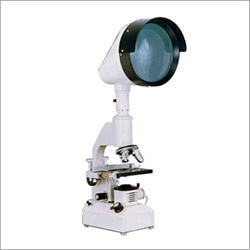
Projection Microscope
Price 12500 INR
Minimum Order Quantity : 1 Unit
Light Source : Halogen lamp
Working Stage : Double layer mechanical stage with controls
Theory : Other
Illumination : 6V 20W Halogen lamp
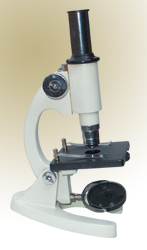
Single Nos Microscope
Price 1800 INR
Minimum Order Quantity : 10 Pieces
Light Source : Mirror; provision for external lamp
Working Stage : Square mechanical stage, with slide clips
Theory : Other, Optical microscopy using transmitted light for specimen examination
Illumination : Mirror with adjustable angle for natural light; provision for substage lamp

 Send Inquiry
Our Products
- RESEARCH MICROSCOPE
- LABORATORY INSTRUMENTS
- LABORATORY MICROSCOPE
- CHEMISRTY EQUIPMENTS
- OPTICAL BENCHES
- AUTOMATIC PROJECTORS
- HUMAN FIBRE MODELS
- BIOCHEMISTRY EQUIPMENTS
- BIOLOGY LAB EQUIPMENT
- DIGITAL THERMOMETER
- DIGITAL HYDROMETER
- ELECTRONICS ITEMS
- PHYSIOLOGY TESTS
- PHYSIC RESEARCH INSTRUMENTS
- SODA GLASSWARE
- BOROSILICATE GLASSWARE
- PHARMACY EQUIPMENTS & INSTRUMENTS
- Thermometer
- Microscope's Camera
- Microscope's software
- Histopathology
- Operating Microscopes
- Biotechnology Instruments
- Ophthalmic Equipment
- Molecular Biology
- D-Pharmacy Equipment
- Communication Lab Instruments
- Civil Engineering
- Chemistry
- Physics
- tuning fork
- Inverimental
- Hot Air Oven
- Mortuary Chamber

No.-3111/12, Cross Road No. 10, Kacha Bazar, Ambala Cantt - 133001, Haryana, India

Mr Anil Kumar Rana
(Proprietor)
Mobile :08045802246
 Send Inquiry
 Send SMS
 Call Me Free
Developed and Managed by Infocom Network Private Limited.
