Call us now :08045802246
 Send Inquiry
 Send Inquiry
Single Nos Microscope
MOQ : 10 Pieces
Single Nos Microscope Specification
- Spare Parts
- Replacement eyepieces, objectives, mirror
- Focus System
- Rack and pinion mechanism
- Features
- Heavy metal base for stability, anti-reflective coated optics, simple operation
- View Head
- Monocular
- Theory
- Optical microscopy using transmitted light for specimen examination
- Drawtube
- Monocular
- Sensor
- None (Optical only)
- Resolution
- Dependent on objective lens, typically up to 1000x
- Interface
- Mechanical stage, manual adjustment
- Focal Distance
- Variable, depending on objective in use
- Magnification
- 100x to 1000x (using standard objectives and eyepieces)
- Dimensions
- Approx 190mm x 135mm x 350mm
- Focus Range
- Coarse and Fine focus available
- Eyepieces
- Wide field 10x
- Eyepiece Tube
- Straight (Monocular)
- Illumination
- Mirror with adjustable angle for natural light; provision for sub-stage lamp
- Coarse Adjustment Range
- Approx 15 mm
- Fine Adjustment Range
- Approx 1.8 mm
- Working Stage
- Square mechanical stage, with slide clips
- Image Format
- Optical only (no digital capture)
- Interpupillary Distance
- Not applicable (monocular)
- Objective Achromatic
- Packed with 10x, 45x, and 100x (oil immersion) achromatic objectives
- Condenser
- Fixed condenser with iris diaphragm
- Light Source
- Mirror; provision for external lamp
- Color
- Off-white
- Application
- School, laboratory, educational use
- Weight
- Approx 3.5 kg
- Maintenance
- Easy to clean and maintain
- Slide Holder
- Spring type slide clips
- Diaphragm Type
- Iris diaphragm
- Base
- Heavy stable base with rubber feet
- Body Material
- Metal with powder-coated finish
- Packing
- Supplied in foam-box/strong cardboard carton
- Stage Size
- 120mm x 120mm
About Single Nos Microscope
Single Nos Microscope
Horse shoe shaped base, monocular inclinable body having coarse motion focusing by rack-n-pinion. Sub stage iris diaphragm for light control from plano-concave reflector. Packed in thermocol box. Achromatic objective: 10x Hug. Eyepiece: 10 x or 15x Magnification: 100 x or 150x
Horse shoe shaped base, monocular inclinable body having coarse motion focusing by rack-n-pinion. Sub stage iris diaphragm for light control from plano-concave reflector. Packed in thermocol box. Achromatic objective: 10x Hug. Eyepiece: 10 x or 15x Magnification: 100 x or 150x
Sturdy, User-Friendly Design
Featuring a powder-coated metal body and a heavy, stable base, this microscope is built for reliable daily use in educational and laboratory settings. The rubber feet reduce movement and protect surfaces, while anti-reflective optics ensure consistently clear images. The square mechanical stage with spring-loaded slide clips allows secure, precise positioning of specimens.
Versatile Optical Performance
Equipped with achromatic objectives (10x, 45x, and 100x oil immersion) and a wide-field 10x eyepiece, this monocular microscope can achieve magnifications from 100x up to 1000x. Its fixed condenser, iris diaphragm, and smooth rack-and-pinion focus system provide crisp, bright views of microscopic samples for educational and research purposes.
Simple Illumination and Maintenance
The built-in mirror allows easy lighting with natural or artificial sources, while provisions for an external lamp extend adaptability. Cleaning and maintaining the microscope is straightforward, thanks to its high-quality materials and accessible design, supporting a long service life with easy replacement of key components like objectives and eyepieces.
FAQs of Single Nos Microscope:
Q: How do I achieve the best image quality with this microscope?
A: For optimal image clarity, select the appropriate objective lens (10x, 45x, or 100x oil immersion), adjust the iris diaphragm for light control, and use both coarse and fine focus knobs. Ensure the mirror is angled correctly for sufficient illumination, or use a sub-stage lamp if necessary.Q: What are the primary applications for this microscope?
A: This model is designed for educational and laboratory work, making it ideal for school experiments, teaching, and basic biological research where optical, transmitted light microscopy is required.Q: When should I use the oil immersion (100x) objective?
A: The 100x oil immersion lens should be used when observing very fine cellular details requiring maximum magnification. Place a drop of immersion oil on the slide before bringing the lens into contact to enhance image resolution.Q: Where is the microscope best placed for use?
A: Choose a flat, stable surface near a natural light source for mirror illumination, or near a power supply if using an external lamp. The heavy base and rubber feet ensure the microscope remains steady during use.Q: What is the process for changing objective lenses or eyepieces?
A: To switch objectives, gently rotate the nosepiece until the desired lens clicks into place. Eyepieces can be swapped by carefully lifting the current eyepiece from the straight monocular tube and inserting the replacement.Q: How do I clean and maintain the microscope?
A: Clean optical surfaces with lens paper and appropriate cleaner, and use a soft, damp cloth for the body. Regularly check moving parts for dust or debris, and store the microscope in its foam or cardboard carton when not in use.Q: What are the benefits of the heavy metal base and anti-reflective optics?
A: The substantial metal base provides stability for accurate focusing and reduced vibration, while anti-reflective coatings improve light transmission, delivering brighter, sharper images during examination.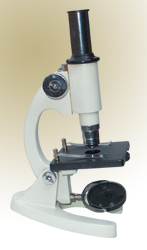
Tell us about your requirement

Price:
Quantity
Select Unit
- 50
- 100
- 200
- 250
- 500
- 1000+
Additional detail
Mobile number
Email

More Products in LABORATORY MICROSCOPE Category
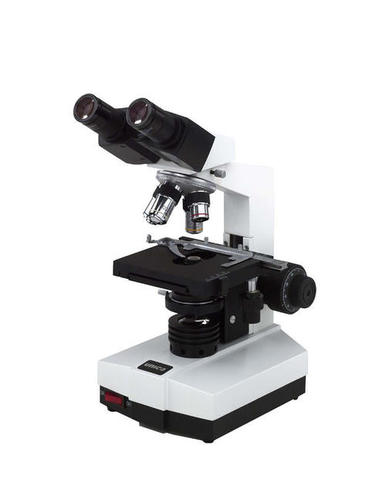
Binocular Co-Xial Microscope
Price 22000.0 INR
Minimum Order Quantity : 1 Piece
Working Stage : Doublelayer mechanical stage with XY movement Square Millimeter (mm2)
Dimensions : Standard laboratory size Millimeter (mm)
Theory : Other
Illumination : LED Illumination
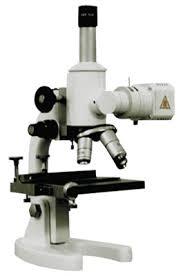
Monocular Metallurgical Microscope
Working Stage : Rectangular mechanical stage, 110 x 120 mm with XY movement
Dimensions : Approx. 360 mm (H) x 200 mm (W) x 250 mm (D)
Theory : Other, Reflected light microscopy for metallurgical analysis
Illumination : Incident (reflected) light, builtin electric lamp
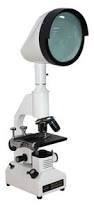
Projection Microscope
Price 6000 INR / Piece
Minimum Order Quantity : 1 Piece
Working Stage : Mechanical stage
Theory : Other, Projection microscope

 Send Inquiry
Our Products
- RESEARCH MICROSCOPE
- LABORATORY INSTRUMENTS
- LABORATORY MICROSCOPE
- CHEMISRTY EQUIPMENTS
- OPTICAL BENCHES
- AUTOMATIC PROJECTORS
- HUMAN FIBRE MODELS
- BIOCHEMISTRY EQUIPMENTS
- BIOLOGY LAB EQUIPMENT
- DIGITAL THERMOMETER
- DIGITAL HYDROMETER
- ELECTRONICS ITEMS
- PHYSIOLOGY TESTS
- PHYSIC RESEARCH INSTRUMENTS
- SODA GLASSWARE
- BOROSILICATE GLASSWARE
- PHARMACY EQUIPMENTS & INSTRUMENTS
- Thermometer
- Microscope's Camera
- Microscope's software
- Histopathology
- Operating Microscopes
- Biotechnology Instruments
- Ophthalmic Equipment
- Molecular Biology
- D-Pharmacy Equipment
- Communication Lab Instruments
- Civil Engineering
- Chemistry
- Physics
- tuning fork
- Inverimental
- Hot Air Oven
- Mortuary Chamber

No.-3111/12, Cross Road No. 10, Kacha Bazar, Ambala Cantt - 133001, Haryana, India

Mr Anil Kumar Rana
(Proprietor)
Mobile :08045802246
 Send Inquiry
 Send SMS
 Call Me Free
Developed and Managed by Infocom Network Private Limited.
