
Call us now :08045802246
 Send Inquiry
 Send Inquiry
Florescence Trinocular Microscope
Price 27000 INR/ Piece
MOQ : 1 Piece
Florescence Trinocular Microscope Specification
- Features
- Fluorescence illumination system, sturdy metal frame, anti-fungal optics, ergonomic design
- Focus System
- Coaxial coarse & fine adjustment
- Spare Parts
- Fuses, bulbs, immersion oil, dust cover
- View Head
- Trinocular, 30° inclined, 360° rotatable
- Theory
- Florescence microscopy provides enhanced contrast for observing structures within specimens tagged with fluorescent markers.
- Drawtube
- Trinocular
- Sensor
- Compatible with standard microscopy cameras (not included)
- Resolution
- Up to 1920 x 1080 pixels (camera dependent)
- Interface
- Standard C-mount adapter
- Frame Rate
- 30fps (with compatible camera, not included)
- Focal Distance
- Adjustable via coarse and fine focus
- Magnification
- 40X to 1000X (4x, 10x, 40x, 100x objectives)
- Dimensions
- Approx. 430mm x 220mm x 170mm
- Focus Range
- Coarse adjustment: 25mm, Fine adjustment: 0.002mm graduation
- Eyepieces
- Wide field 10X (paired)
- Eyepiece Tube
- Inclined at 30°, rotatable 360°
- Illumination
- LED high intensity illumination with variable brightness
- Coarse Adjustment Range
- Approx. 25mm
- Fine Adjustment Range
- Approx. 0.002mm graduation
- Working Stage
- Double layer mechanical stage, 140 x 135mm
- Still Image Capture Resolution
- Up to 5MP (depends on camera)
- Video Capture Resolution
- Full HD 1080p (depends on camera)
- Image Format
- JPEG, PNG (camera dependent)
- Interpupillary Distance
- 55-75mm adjustable
- Objective Achromatic
- Achromatic 4X, 10X, 40X (S), 100X (S, Oil)
- Condenser
- Abbe condenser N.A.1.25, iris diaphragm
- Light Source
- High power LED with filter set (Blue excitation and barrier filters included)
- Nosepiece
- Quadruple revolving nosepiece with click stop
- Weight
- Approx. 7.5 kg (without camera)
- Transmitted Light
- Included for brightfield applications
- Power Supply
- AC 220V/110V, 50Hz/60Hz
- Filter Set
- Supplied with standard blue excitation and emission filter cubes
- Application Areas
- Suitable for biology, medicine, pathology, research, and teaching
- Phototube
- Dedicated phototube for camera attachment
- Body Material
- Reinforced metal with corrosion-resistant coating
- Stage Clip
- Provided for slide securing
- Blue and Green Filter
- Included for different excitation needs
- Stage Movement
- 75 x 50mm (X-Y mechanical movement)
About Florescence Trinocular Microscope
Florescence Trinocular Microscope
Epi-Fluorescence Illuminator: The Epi-illumination is through 100W High pressure Mercury Lamp or 5W LED in a lamp housing attached to the fluorescent filter block. The exciting light spectrum range is 350nm-580nm. The Fluorescent Light spectrum range is 420nm-650nm. Two exciting filters (EX) - Blue Light (EX-490) and Green Light (EX-545) color separation prism (DM) comprise of blue light (BA-530), green light (BA-590). Central position provides ordinary transmission light from the base for normal microscopy work. Illumination Box is provided with a power supply of 200V or 110V and HBO, super high pressured spherical mercury vapor lamp 100W. UV protection screen is provided to safeguard the operator from harmful radiations.
Fluorescent Attachment (Mercury or LED Option)
An ideal attachment for research of biology, tumology, cytology, immunology and Hematology. It is suited for fluorescent Microscopy used in venereal disease examination and immune less diagnosis. At the same time it is also used for analysis of sedimentary rocks, inspection of impurities in semiconductors, environmental protection and micro chemistry.
Epi-Fluorescence Illuminator: The Epi-illumination is through 100W High pressure Mercury Lamp or 5W LED in a lamp housing attached to the fluorescent filter block. The exciting light spectrum range is 350nm-580nm. The Fluorescent Light spectrum range is 420nm-650nm. Two exciting filters (EX) - Blue Light (EX-490) and Green Light (EX-545) color separation prism (DM) comprise of blue light (BA-530), green light (BA-590). Central position provides ordinary transmission light from the base for normal microscopy work. Illumination Box is provided with a power supply of 200V or 110V and HBO, super high pressured spherical mercury vapor lamp 100W. UV protection screen is provided to safeguard the operator from harmful radiations.
Fluorescent Attachment (Mercury or LED Option)
An ideal attachment for research of biology, tumology, cytology, immunology and Hematology. It is suited for fluorescent Microscopy used in venereal disease examination and immune less diagnosis. At the same time it is also used for analysis of sedimentary rocks, inspection of impurities in semiconductors, environmental protection and micro chemistry.
Advanced Fluorescence Illumination
Equipped with high-power LED and filter setsincluding blue and green filtersthis microscope excels in fluorescence imaging, revealing intricate cellular structures. The precision iris diaphragm and Abbe condenser further optimize light control for enhanced contrast.
Flexible Imaging Solutions
The trinocular view head, inclined at 30, can rotate 360, providing both comfortable observation and straightforward camera attachment. Standard C-mount compatibility and support for image formats like JPEG and PNG offer flexibility in documentation and analysis.
User-Friendly Operation and Design
Ergonomically crafted with anti-fungal optics and sturdy reinforced metal, this microscope ensures reliable, long-term use in demanding research or teaching settings. The mechanical stage with X-Y movement and secure stage clips simplifies specimen handling and focusing.
FAQs of Florescence Trinocular Microscope:
Q: How does the fluorescence illumination system enhance specimen observation?
A: The integrated fluorescence illumination, with blue excitation and emission filters, enables visualization of specific structures tagged with fluorescent markers, providing higher contrast and sharper detail than standard brightfield methods.Q: What process is involved in capturing images with this microscope?
A: Connect a compatible microscopy camera to the dedicated phototube using the standard C-mount adapter, then adjust focus using coarse and fine controls. Still images up to 5MP and videos up to 1080p can be captured, depending on the camera used.Q: When should I use the brightfield transmitted light feature?
A: Brightfield illumination is recommended for general specimen observation that does not require fluorescence, such as routine tissue analysis or teaching applications, allowing examination of stained or unstained samples with natural contrast.Q: Where can this microscope be applied professionally?
A: Ideal for biology, medicine, pathology, research, and education, the microscope serves professionals in laboratories, hospitals, research institutes, and academic settings across various disciplines requiring high-detail specimen analysis.Q: What are the benefits of the reinforced metal body with corrosion-resistant coating?
A: The robust metal frame provides durability and stability during use. Its corrosion-resistant coating minimizes wear from repeated handling and exposure to laboratory environments, ensuring longevity and consistent performance.Q: How do I switch magnifications during specimen analysis?
A: Use the quadruple revolving nosepiece with click stop to select among the achromatic objectives: 4X, 10X, 40X, or 100X (oil). This enables seamless transitions between low, medium, and high magnification for detailed viewing.Q: Is the microscope suitable for prolonged research sessions?
A: Yes, the microscopes ergonomic design, anti-fungal optics, variable illumination, and smooth focus adjustments ensure comfort and reliability during extended research or teaching activities.
Tell us about your requirement

Price:
Quantity
Select Unit
- 50
- 100
- 200
- 250
- 500
- 1000+
Additional detail
Mobile number
Email

More Products in LABORATORY MICROSCOPE Category
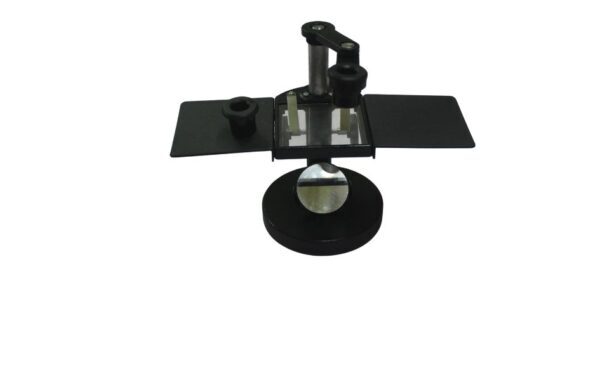
20x Magnification Stereo Dissecting Microscope
Price 900.0 INR / Piece
Minimum Order Quantity : 5 Pieces
Working Stage : Flat circular stage with base illumination Square Yard (yd2)
Theory : Stereo Microscope
View Head : BINOCULAR HEAD
Light Source : Integrated base lighting
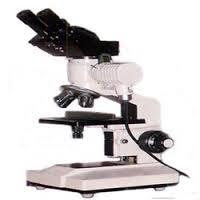
Binocular Metallurgical Microscope
Price 6000 INR / Piece
Minimum Order Quantity : 1 Piece
Working Stage : 175mm x 145mm mechanical stage with slide holder
Theory : Binocular optical theory, Other
View Head : Binocular head with 360degree rotation
Light Source : Halogen lamp
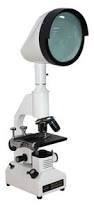
Projection Microscope
Price 6000 INR / Piece
Minimum Order Quantity : 1 Piece
Working Stage : Mechanical stage
Theory : Other, Projection microscope
View Head : Projection screen head

 Send Inquiry
Our Products
- RESEARCH MICROSCOPE
- LABORATORY INSTRUMENTS
- LABORATORY MICROSCOPE
- CHEMISRTY EQUIPMENTS
- OPTICAL BENCHES
- AUTOMATIC PROJECTORS
- HUMAN FIBRE MODELS
- BIOCHEMISTRY EQUIPMENTS
- BIOLOGY LAB EQUIPMENT
- DIGITAL THERMOMETER
- DIGITAL HYDROMETER
- ELECTRONICS ITEMS
- PHYSIOLOGY TESTS
- PHYSIC RESEARCH INSTRUMENTS
- SODA GLASSWARE
- BOROSILICATE GLASSWARE
- PHARMACY EQUIPMENTS & INSTRUMENTS
- Thermometer
- Microscope's Camera
- Microscope's software
- Histopathology
- Operating Microscopes
- Biotechnology Instruments
- Ophthalmic Equipment
- Molecular Biology
- D-Pharmacy Equipment
- Communication Lab Instruments
- Civil Engineering
- Chemistry
- Physics
- tuning fork
- Inverimental
- Hot Air Oven
- Mortuary Chamber

No.-3111/12, Cross Road No. 10, Kacha Bazar, Ambala Cantt - 133001, Haryana, India

Mr Anil Kumar Rana
(Proprietor)
Mobile :08045802246
 Send Inquiry
 Send SMS
 Call Me Free
Developed and Managed by Infocom Network Private Limited.
