Call us now :08045802246
 Send Inquiry
 Send Inquiry
Stereoscopic Microscope
MOQ : 5 Units
Stereoscopic Microscope Specification
- Operate Method
- manual
- Spare Parts
- Supplied with dust cover, black & white stage plates, and extra eyepiece pair
- Features
- Three-dimensional observation, rugged construction, light weight, portable, easy operation
- Focus System
- Rack and pinion type with adjustable tension control
- Material
- stainless steel
- Theory
- Stereo Microscope
- Drawtube
- Binocular
- Focal Distance
- Approximately 100 mm
- Magnification
- 20X and 40X (with standard objectives and eyepieces)
- Dimensions
- Approx. 210 mm (L) x 130 mm (W) x 300 mm (H)
- Focus Range
- Up to 50 mm
- Eyepieces
- Paired widefield 10X (can be fitted with 15X or 20X as required)
- Eyepiece Tube
- Inclined at 45 for comfortable viewing
- Illumination
- Incident (top) and transmitted (bottom), reflected by adjustable mirror; can be equipped with LED or halogen light source
- Coarse Adjustment Range
- 50 mm
- Working Stage
- Stage plate with stage clips and interchangeable black/white and frosted glass plates
- View Head
- Binocular head, 360 rotatable
- Interpupillary Distance
- Adjustable from 55 mm to 75 mm
- Objective Achromatic
- Achromatic 2X and 4X objectives, turret mounted
- Light Source
- Dual illumination (Incident and Transmitted), with mirror control or optional built-in electric lamp
- Packaged Accessories
- User manual, cleaning cloth, warranty card
- Stage Plate Diameter
- Approximately 90 mm
- Base Type
- Heavy, anti-skid base for stable operation
- Power Supply
- Optional electric lamp: AC 220V/110V
- Body Material
- Sturdy metal frame with anti-rust finishing
- Color
- White frame with black accents
- Net Weight
- About 3 kg
Stereoscopic Microscope Trade Information
- Minimum Order Quantity
- 5 Units
- Supply Ability
- 1000 Units Per Year
- Delivery Time
- 1 Week
- Main Domestic Market
- All India
- Certifications
- CE CERTIFIED CO. NSIC MSME CERTIFIED ISO 9001:2015
About Stereoscopic Microscope
Stereoscopic Microscope
- Dissection of Organisms, Medical Science, Quality Control, Inspection & Research Purposes.
- Observation Head - Binocular head inclined at 45° rotated through 360° with adjustable inter-papillary distance.
- Focussing - By Rack and Pinion mechanism with adjustable tension collar.
- Magnification - Standard magnification 20X & 40X or 10 xs & 30 xs.
- Illumination - With integral illuminator, 2 lamps are fitted to provide both transmitted and incident illumination.
- Objectives - 2 sets of objectives 2X and 4X, selected by rotating nosepiece through 90°
- Eyepieces - Standard extra wide field eyepieces WF-10X is provided.
- Optional - 1x and 3x are available.
Three-Dimensional Viewing for Accurate Analysis
Experience enhanced specimen detail with stereoscopic microscopy. Utilising two distinct optical paths, this microscope creates a true three-dimensional image, allowing you to better evaluate surface textures and structures. It offers precise and comfortable viewing, making it ideal for tasks in biology labs, quality control, or gemology.
Rugged Construction and Ergonomic Design
Built from sturdy metal with an anti-rust finish and heavy anti-skid base, the microscope ensures stability and durability during operation. The inclined eyepiece tube and adjustable interpupillary distance provide ergonomic comfort, even during prolonged observation, making it suitable for both students and professionals.
Flexible Illumination and Magnification Options
Dual illumination (incident and transmitted) guarantees clear visibility with adjustable lighting choices, either via mirror reflection or optional electric lamp (AC 220V/110V). Select between 20X and 40X magnification using turret-mounted achromatic objectives, with widefield eyepieces further optimising the observation experience.
FAQs of Stereoscopic Microscope:
Q: How does the stereoscopic microscope produce a three-dimensional image?
A: The microscope uses two separate optical paths through its binocular head. Each eye receives a slightly different angle of the specimen, creating a true three-dimensional view and allowing for precise inspection of surface contours.Q: What is the maximum magnification offered and can it be increased?
A: The standard configuration provides 20X and 40X magnification using paired widefield 10X eyepieces and achromatic objectives. Magnification can be increased to 60X or 80X by fitting 15X or 20X eyepieces, respectively.Q: When should I use incident or transmitted illumination?
A: Incident (top) illumination is best for opaque specimens where surface detail is critical, while transmitted (bottom) illumination suits transparent or translucent samples. You can use both simultaneously for challenging specimens that require enhanced visibility.Q: Where can this stereoscopic microscope be effectively used?
A: It is suitable for education, biology labs, electronics inspection, gemology, entomology, and quality control environments, providing versatile performance in both academic and industrial settings.Q: What benefits does the heavy, anti-skid base provide during use?
A: The heavy base with anti-skid features ensures the microscope remains stable during adjustments and observation, preventing accidental movement and enhancing safety and accuracy.Q: How should I maintain the microscope for optimal performance?
A: Regular cleaning with the supplied cloth, proper dust cover use, and correct storage of interchangeable stage plates and eyepieces are recommended. Refer to the user manual for specific maintenance procedures and keep accessories readily accessible.Q: What accessories come packaged with the microscope?
A: Included are spare eyepieces, interchangeable black & white and frosted glass stage plates, a dust cover, user manual, cleaning cloth, and a warranty card, providing all essentials for immediate and long-term use.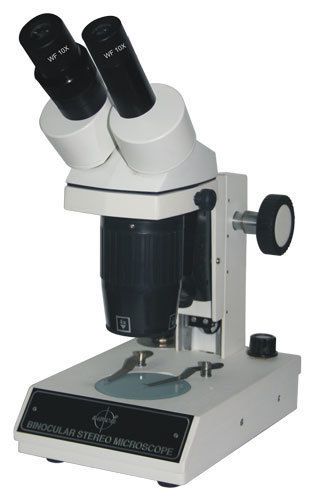
Tell us about your requirement

Price:
Quantity
Select Unit
- 50
- 100
- 200
- 250
- 500
- 1000+
Additional detail
Mobile number
Email

More Products in LABORATORY MICROSCOPE Category

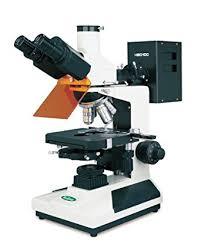
Florescence Trinocular Microscope
Price 27000 INR / Piece
Minimum Order Quantity : 1 Piece
Illumination : LED high intensity illumination with variable brightness
Dimensions : Approx. 430mm x 220mm x 170mm
Light Source : High power LED with filter set (Blue excitation and barrier filters included)
Interpupillary Distance : 5575mm adjustable
Florescence Trinocular Microscope
Illumination : LED or Mercury lamp with brightness adjustment; Blue, Green, Yellow, Ultraviolet filters present
Dimensions : Approx. 430 x 260 x 420 mm
Light Source : Fluorescence attachment Mercury or LED Lamp (excitation filters included)
Interpupillary Distance : 5575 mm adjustable
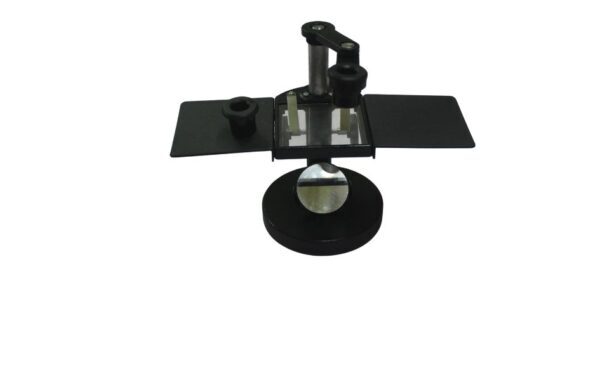
20x Magnification Stereo Dissecting Microscope
Price 900.0 INR / Piece
Minimum Order Quantity : 5 Pieces
Illumination : Builtin LED base illumination
Dimensions : Approx. standard microscope size (compact) Meter (m)
Light Source : Integrated base lighting
Interpupillary Distance : Adjustable Meter (m)

Advanced Trinocular inverted tissue culture microscope
Illumination : LED with adjustable brightness
Dimensions : 400 x 550 x 680 mm
Light Source : Halogen/LED
Interpupillary Distance : Adjustable 5575 mm

 Send Inquiry
Our Products
- RESEARCH MICROSCOPE
- LABORATORY INSTRUMENTS
- LABORATORY MICROSCOPE
- CHEMISRTY EQUIPMENTS
- OPTICAL BENCHES
- AUTOMATIC PROJECTORS
- HUMAN FIBRE MODELS
- BIOCHEMISTRY EQUIPMENTS
- BIOLOGY LAB EQUIPMENT
- DIGITAL THERMOMETER
- DIGITAL HYDROMETER
- ELECTRONICS ITEMS
- PHYSIOLOGY TESTS
- PHYSIC RESEARCH INSTRUMENTS
- SODA GLASSWARE
- BOROSILICATE GLASSWARE
- PHARMACY EQUIPMENTS & INSTRUMENTS
- Thermometer
- Microscope's Camera
- Microscope's software
- Histopathology
- Operating Microscopes
- Biotechnology Instruments
- Ophthalmic Equipment
- Molecular Biology
- D-Pharmacy Equipment
- Communication Lab Instruments
- Civil Engineering
- Chemistry
- Physics
- tuning fork
- Inverimental
- Hot Air Oven
- Mortuary Chamber

No.-3111/12, Cross Road No. 10, Kacha Bazar, Ambala Cantt - 133001, Haryana, India

Mr Anil Kumar Rana
(Proprietor)
Mobile :08045802246
 Send Inquiry
 Send SMS
Developed and Managed by Infocom Network Private Limited.
