
Call us now :08045802246
 Send Inquiry
 Send Inquiry
Trans illuminators
Price 3500 INR/ Piece
MOQ : 1 Piece
Trans illuminators Specification
- Capacity
- Single gel at a time
- Measurement Range
- Gel dimensions up to 200 x 200 mm
- Sensor Type
- UV Fluorescent Tubes
- Frequency
- 50/60 Hz
- Connectivity Type
- No connectivity
- Temperature Range
- Ambient
- Humidity %
- Max 90%, non-condensing
- Resolution
- Suitable for DNA/RNA visualization
- Material
- Aluminum Alloy and Acrylic UV filter
- Power Supply
- 230 V AC, 50 Hz
- Power Consumption
- 25 W
- Accuracy
- High uniformity illumination +/-5%
- Display Type
- No display (Manual Operation)
- Range
- UV transmittance range 302 nm / 365 nm
- Safety Feature
- Acrylic UV protection cover
- Wavelengths
- Multiple (302 nm, 365 nm)
- Applications
- DNA/RNA Gel Visualization, Fluorescent Stain Detection
- Cooling System
- Passive, no active fan
- Equipment Type
- Trans Illuminator
- Number of Tubes
- 6 UV tubes
- Weight
- Approx. 6.5 kg
- Operation Mode
- Manual On/Off switch
- Viewing Surface Dimension
- 200 x 200 mm
- Input Voltage
- AC 220-240V
- Lamp Life
- Approx. 6000 hours
- Filter Type
- UV-protective filter, removable
About Trans illuminators
Reserve your space among the experts with this ravishing Trans Illuminator, designed for those seeking enviable results in DNA/RNA gel visualization and fluorescent stain detection. Carefully select from uncommon features like a dual-wavelength (302/365 nm) system, a generous 200 x 200 mm viewing surface, and six UV tubes for high uniformity illumination. The acrylic UV protection cover ensures your safety, while the removable UV-protective filter allows versatility. Pick yours for premium performance, durability (aluminum alloy), and up to 6000 hours lamp life. Proudly manufactured and exported from India.
Application & Usage of Trans Illuminators
Trans illuminators are extensively used for DNA/RNA gel visualization, serving researchers in biotechnology and molecular biology laboratories. Used as critical tools for fluorescent stain detection, they deliver high uniformity illumination (5%) over gels with dimensions up to 200 x 200 mm. Operation is manual, making them ideal for both educational and professional settings, facilitating single gel analysis with outstanding resolution, accuracy, and reliability.
Goods Transport, Outlay & Export Market for Trans Illuminators
Delivery time for trans illuminators is typically swift, depending on order volume and regional logistics. Payment terms are flexible and tailored to accommodate a premium outlay, ensuring smooth procurement. Goods transport is managed through trusted channels, ensuring safe and secure arrival. The main export markets include Asia, Europe, and North America, with India as the key hub for manufacturing and supply of these high-quality scientific instruments.
Application & Usage of Trans Illuminators
Trans illuminators are extensively used for DNA/RNA gel visualization, serving researchers in biotechnology and molecular biology laboratories. Used as critical tools for fluorescent stain detection, they deliver high uniformity illumination (5%) over gels with dimensions up to 200 x 200 mm. Operation is manual, making them ideal for both educational and professional settings, facilitating single gel analysis with outstanding resolution, accuracy, and reliability.
Goods Transport, Outlay & Export Market for Trans Illuminators
Delivery time for trans illuminators is typically swift, depending on order volume and regional logistics. Payment terms are flexible and tailored to accommodate a premium outlay, ensuring smooth procurement. Goods transport is managed through trusted channels, ensuring safe and secure arrival. The main export markets include Asia, Europe, and North America, with India as the key hub for manufacturing and supply of these high-quality scientific instruments.
FAQs of Trans illuminators:
Q: How can trans illuminators be used for gel visualization?
A: Trans illuminators are used by placing DNA or RNA gels on the viewing surface, which is illuminated by UV fluorescent tubes at 302 nm or 365 nm wavelengths. This process enhances visibility of stained bands for analysis or documentation.Q: What safety features are incorporated in the trans illuminator?
A: The equipment features an acrylic UV protection cover and a removable UV-protective filter, designed to safeguard users from direct ultraviolet exposure during operation.Q: When is the ideal time to use a trans illuminator in laboratory work?
A: Trans illuminators are typically used after gel electrophoresis, when stains have been applied and visualization or documentation of nucleic acid bands is required.Q: Where are these trans illuminators primarily exported?
A: The main export markets for these trans illuminators include Asia, Europe, and North America, with India as the principal manufacturing hub.Q: What is the process for maintaining the trans illuminator?
A: Maintenance involves periodically checking the UV tubes, cleaning the acrylic surface and filter, and ensuring the manual switch functions properly. The passive cooling system requires minimal upkeep.Q: What benefit does the multiple-wavelength feature provide?
A: Having both 302 nm and 365 nm wavelengths allows for versatility in visualizing diverse fluorescent stains, offering enhanced detection sensitivity and adaptability for various gel applications.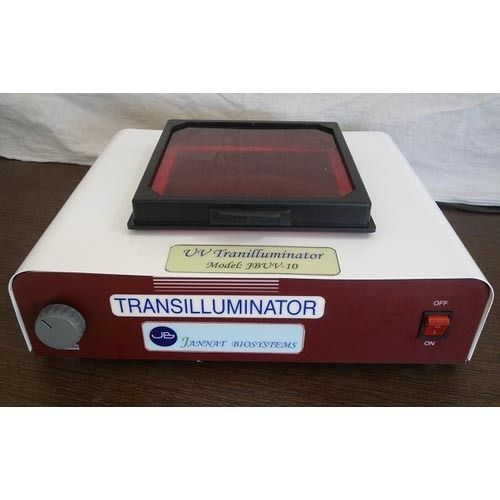
Tell us about your requirement

Price:
Quantity
Select Unit
- 50
- 100
- 200
- 250
- 500
- 1000+
Additional detail
Mobile number
Email

More Products in Biotechnology Instruments Category
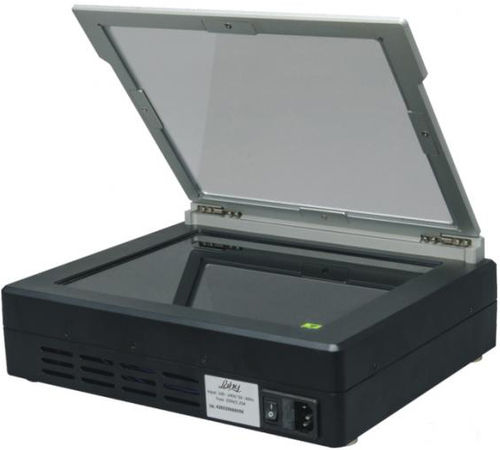
U. V. Trans illuminator
Material : Metal frame and UVtransparent glass
Power Supply : 220V AC
Display Type : Other, None
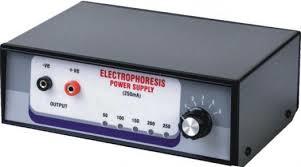
Electrophoresis Power Supply
Price 2900 INR / Piece
Minimum Order Quantity : 1 Piece
Material : Metal
Power Supply : 230V AC
Current Range : 0500 mA
Display Type : Other, Analog
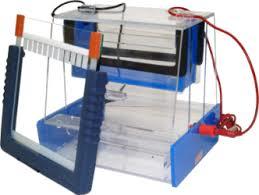
Electrophoresis Unit
Price 3000 INR / Piece
Minimum Order Quantity : 1 Piece
Material : Acrylic
Power Supply : 220240 V AC
Current Range : 1060 mA
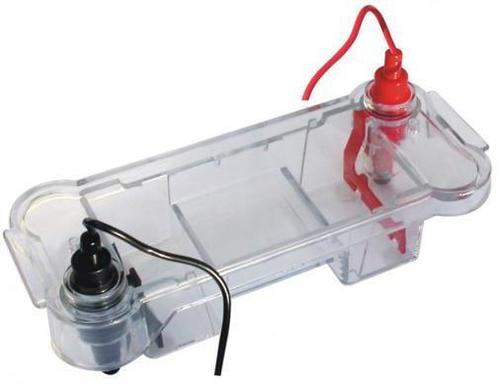
Gel Electrophoresis Unit, Mini horizontal
Price 2500 INR / Piece
Minimum Order Quantity : 1 Piece
Material : Plastic

 Send Inquiry
Our Products
- RESEARCH MICROSCOPE
- LABORATORY INSTRUMENTS
- LABORATORY MICROSCOPE
- CHEMISRTY EQUIPMENTS
- OPTICAL BENCHES
- AUTOMATIC PROJECTORS
- HUMAN FIBRE MODELS
- BIOCHEMISTRY EQUIPMENTS
- BIOLOGY LAB EQUIPMENT
- DIGITAL THERMOMETER
- DIGITAL HYDROMETER
- ELECTRONICS ITEMS
- PHYSIOLOGY TESTS
- PHYSIC RESEARCH INSTRUMENTS
- SODA GLASSWARE
- BOROSILICATE GLASSWARE
- PHARMACY EQUIPMENTS & INSTRUMENTS
- Thermometer
- Microscope's Camera
- Microscope's software
- Histopathology
- Operating Microscopes
- Biotechnology Instruments
- Ophthalmic Equipment
- Molecular Biology
- D-Pharmacy Equipment
- Communication Lab Instruments
- Civil Engineering
- Chemistry
- Physics
- tuning fork
- Inverimental
- Hot Air Oven
- Mortuary Chamber

No.-3111/12, Cross Road No. 10, Kacha Bazar, Ambala Cantt - 133001, Haryana, India

Mr Anil Kumar Rana
(Proprietor)
Mobile :08045802246
 Send Inquiry
 Send SMS
 Call Me Free
Developed and Managed by Infocom Network Private Limited.
