
Call us now :08045802246
 Send Inquiry
 Send Inquiry
Newtons Ring Microscope
Price 9200 INR/ Unit
MOQ : 2 Units
Newtons Ring Microscope Specification
- Temperature Range
- Ambient Laboratory Conditions
- Power Source
- Manual
- Model No
- Standard Newtons Ring Microscope
- Automation Grade
- Manual Operation
- Feature
- Precise mechanical movement, high optical quality, includes foot screws for levelling
- Measurement Range
- 10 mm traverse range on micrometer scale
- Core Components
- Eyepiece, Objective lens, Rotatable stage, Tilting arrangement, Focusing knob, Glass plate, Plano-convex lens
- Accuracy
- Measurement accuracy up to 0.01 mm with fine vernier scale
- Equipment Materials
- Body made of sturdy metal, optically true glass lenses and optical components
- Type
- Optical Measurement Microscope
- Usage
- Physics Laboratory instrument for observing Newtons Rings and measuring wavelength of monochromatic light
- Display Type
- Non-Digital, Vernier Scale
- Dimension (L*W*H)
- Approx. 30 cm x 20 cm x 40 cm
- Weight
- Approx. 5 kg
- Illumination
- Mirror-based, for use with external light source or monochromatic lamp
- Eyepiece
- H10x (standard supplied)
- Adjustment Screws
- Levelling foot screws for precise alignment
- Glass Plate Size
- Standard 100 mm diameter
- Magnification
- Up to 40x depending on eyepiece used
- Focusing Mechanism
- Coarse and fine focusing adjustment
- Objective Lens
- Achromatic, 2x
- Optical Path
- Coaxial illumination for high contrast ring observation
- Finish
- Corrosion-resistant, powder-coated finish
- Set Includes
- Microscope, plano-convex lens, glass plate, measuring scale, adjustment tools, storage box
- Vernier Resolution
- 0.001 cm
- Application Fields
- Physics education, optics experiments, wavelength measurement
- Base
- Heavy, stable metal base with anti-skid feet
- Stage Movement
- 360-degree rotatable stage
- Mirror
- Plane and concave mirror for illumination adjustment
Newtons Ring Microscope Trade Information
- Minimum Order Quantity
- 2 Units
- Supply Ability
- 500 Units Per Year
- Delivery Time
- 1 Week
- Main Domestic Market
- All India
- Certifications
- CE CERTIFIED CO. NSIC MSME CERTIFIED ISO 9001:2015
About Newtons Ring Microscope
Newtons Ring Microscope
Compact instrument with full arrangements for conducting Newtons Ring experiment
A standard Microscope unit with 30x magnification and rotatable cross line eye piece
Focusing of microscope is through Rack and Pinion
Longitudinal movement of 26 mm is done by rotating the drum provided which reads up to 0001cm
Complete with optical glass and convex lens inside a metal case
Packed in a sturdy wooden box along with all standard accessories
High-Precision Measurement for Optics Experiments
This Newton's Ring Microscope is specially designed for precise measurements required in optics and physics experiments. It incorporates a fine vernier scale, enabling wavelength measurements with an accuracy of 0.01 mm and a traverse range of 10 mm. Its stability and coaxial illumination ensure you consistently obtain well-defined, high-contrast ring patterns for detailed analysis.
Robust Construction & Versatile Adjustment
Featuring a powder-coated, corrosion-resistant metal body, this microscope combines durability with practical design. The 360-degree rotatable stage and levelling foot screws allow precise sample positioning and alignment. The included achromatic objective lens and adjustable illumination (via plane and concave mirror) ensure optimal viewing conditions for various experimental setups.
Comprehensive Set for Laboratory Use
Each set includes the microscope with a vernier scale, plano-convex lens, standard glass plate, measuring scale, adjustment tools, and a portable storage box. Designed for manual operation, it is suitable for researchers, educators, and students working on optical interference studies in institutional and laboratory environments.
FAQ's of Newtons Ring Microscope:
Q: How does the Newton's Ring Microscope help measure the wavelength of monochromatic light?
A: The microscope enables precise observation of Newton's rings formed due to interference. Using its fine vernier scale (accuracy up to 0.01 mm), users can measure ring diameters accurately, which are essential for calculating the wavelength of the used monochromatic light source.Q: What features facilitate accurate focusing and alignment in this microscope?
A: It is equipped with both coarse and fine focusing mechanisms, a 360-degree rotatable stage, and levelling foot screws. These features, together with the coaxial illumination, provide effortless sample positioning and alignment, resulting in precise and stable observations.Q: When is it ideal to use this Newton's Ring Microscope?
A: This instrument is ideal for use in ambient laboratory conditions, especially during physics education, optics experiments, and when a non-digital, manual method is preferred for measuring optical interference and wavelength in monochromatic light applications.Q: Where can the results obtained with this microscope be effectively applied?
A: The results are valuable in educational laboratories, research institutions, and industrial environments where precise optical measurements and demonstrations of theoretical physics concepts, such as interference, are required.Q: What is the process for setting up and using the microscope for Newton's ring experiments?
A: Set up involves assembling the glass plate and plano-convex lens, levelling the stage with the foot screws, and aligning the sample under coaxial illumination using the adjustable mirrors. Focus on the rings using the fine adjustment and record measurements with the vernier scale.Q: What benefits does the included achromatic objective lens offer?
A: The achromatic objective lens minimizes color distortion and provides sharp, clear ring images. This ensures accurate and high-quality visual inspection, which is essential for correct data interpretation and measurements.Q: How is this microscope powered and what is its required operating environment?
A: The microscope operates manually without the need for electricity. It relies on external or monochromatic light sources for illumination, and is designed for use in typical laboratory temperature and humidity conditions.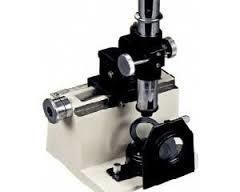
Tell us about your requirement

Price:
Quantity
Select Unit
- 50
- 100
- 200
- 250
- 500
- 1000+
Additional detail
Mobile number
Email

More Products in PHYSIC RESEARCH INSTRUMENTS Category
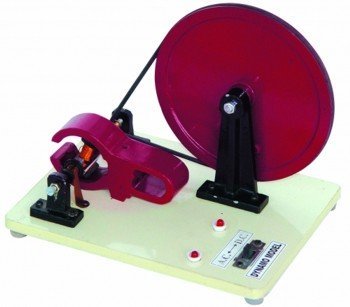
Dynamo Model Ac - Dc
Usage : Physics Lab Experiments
Feature : Demonstrates AC and DC electricity generation
Temperature Range : 0C to 50C
Weight : 1.5kg
Model No : DynACDC001
Automation Grade : Manual
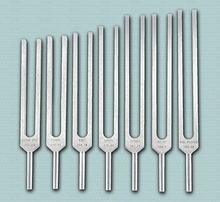
Tuning Forks
Usage : Used for acoustic resonance and frequency calibration
Feature : Acoustic and vibration generation
Temperature Range : Ambient
Weight : Varies depending on fork size
Model No : Generic/Standard
Automation Grade : Manual
Polarimeter laurents Half Shade
Usage : Measurement of optical rotation, analysis of sugar solutions / substances
Feature : High precision optical rotation measurement
Temperature Range : Ambient (nontemperature controlled)
Weight : Approx. 4.5 kg
Model No : Laurent Half Shade
Automation Grade : Manual
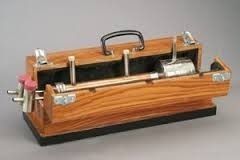
Searle's Thermal Conductivity Apparatus
Usage : Used in laboratories for physics experiments
Feature : For determining thermal conductivity of metals
Temperature Range : Up to 100C
Weight : Approx. 2 kg
Model No : STCA001
Automation Grade : Manual

 Send Inquiry
Our Products
- RESEARCH MICROSCOPE
- LABORATORY INSTRUMENTS
- LABORATORY MICROSCOPE
- CHEMISRTY EQUIPMENTS
- OPTICAL BENCHES
- AUTOMATIC PROJECTORS
- HUMAN FIBRE MODELS
- BIOCHEMISTRY EQUIPMENTS
- BIOLOGY LAB EQUIPMENT
- DIGITAL THERMOMETER
- DIGITAL HYDROMETER
- ELECTRONICS ITEMS
- PHYSIOLOGY TESTS
- PHYSIC RESEARCH INSTRUMENTS
- SODA GLASSWARE
- BOROSILICATE GLASSWARE
- PHARMACY EQUIPMENTS & INSTRUMENTS
- Thermometer
- Microscope's Camera
- Microscope's software
- Histopathology
- Operating Microscopes
- Biotechnology Instruments
- Ophthalmic Equipment
- Molecular Biology
- D-Pharmacy Equipment
- Communication Lab Instruments
- Civil Engineering
- Chemistry
- Physics
- tuning fork
- Inverimental
- Hot Air Oven
- Mortuary Chamber

No.-3111/12, Cross Road No. 10, Kacha Bazar, Ambala Cantt - 133001, Haryana, India

Mr Anil Kumar Rana
(Proprietor)
Mobile :08045802246
 Send Inquiry
 Send SMS
Developed and Managed by Infocom Network Private Limited.
