
Call us now :08045802246
 Send Inquiry
 Send Inquiry
Sherrington Rotating Drum And Kymograph
Sherrington Rotating Drum And Kymograph Specification
- Spare Parts
- Supplied with spare fuses, carbon paper, recording lever, and power cord
- Features
- Heavy-duty metal base, sturdy construction, adjustable drum speed, time marker facility, smooth and uniform rotation, supplied with writing stylus and kymograph paper
- Theory
- A Sherrington Rotating Drum and Kymograph is an electromechanical device used to record physiological events as graphical tracings. It is widely used in experimental physiology and pharmacology for recording activities such as muscle contraction and nerve impulses.
- Sensor
- Not applicable (traditional model uses mechanical stylus)
- Resolution
- Determined by drum speed and chart paper graduation
- Interface
- Manual operation, electrical connection for time marker option
- Frame Rate
- Adjustable drum speed from 1 mm/sec to 400 mm/sec (commonly: 12, 24, 48, 96 rpm)
- Dimensions
- Approx. 390 x 195 x 370 mm (may vary by manufacturer)
- Working Stage
- Cylindrical rotating drum as the writing surface
- Image Format
- Paper roll or kymograph chart
- Drum Material
- Aluminum or brass, smoke-coated
- Input Terminals
- Attachment hooks for tissue, muscle, and nerve
- Accessories Included
- Levers, recording stylus, tissue hooks, power cord, smoked paper, manual
- Recording Length
- Maximum circumference of drum
- Weight
- Approx. 12-15 kg
- Paper Type
- Smoked or glossy paper
- Drive System
- Clockwork and/or electrical motor drive
- Power Requirement
- AC 220V/50 Hz (for electrically driven model)
- Stylus Type
- Universal lever attachment for muscle or nerve recording
- Drum Speed Control
- Manually adjustable, 8 speed levels
- Drum Diameter
- Approximately 150-200 mm
- Application
- Demonstrates muscle contraction, nerve response, pharmacological experiments in physiology labs
Sherrington Rotating Drum And Kymograph Trade Information
- Payment Terms
- Cash in Advance (CID), Cheque, Cash Advance (CA)
- Delivery Time
- 1 Months
- Sample Available
- Yes
- Sample Policy
- Contact us for information regarding our sample policy
- Main Export Market(s)
- Eastern Europe, Middle East, Western Europe, Africa, Central America, Australia, South America, Asia, North America
- Main Domestic Market
- All India
- Certifications
- ISO 9001 2015
About Sherrington Rotating Drum And Kymograph
SHERRINGTON ROTATING DRUM AND KYMOGRAPH
* This is an electrically driven recording drum or kymograph suitable for use by students for lab. Experiments.
*These kymographs are also used to measure atmospheric pressure, tuning fork vibrations and functioning of steam engines.
* its drive mechanism consists of constant speed heavy duty electric motor and an accurate gear box contained in the base together with robust plate clutch. * * Engagement of various gear ratios are affected by sliding the lever into the slot marked with surface speed or by a knob.
* The recording drum or cylinder has a 6' dia and stainless steel spindle have been standardized to make the same universal and interchangeable.
* It has 8 variable speeds.
*The speed is measured in mm per second. Eight variable speeds are 0. 12, 0. 25, 1. 25, 2. 5, 12. 5, 25, 320 and 640 mm per second.
*A hand gear is provided to change the speed of the kymograph.
* Double electric contact arms are clamped on the main spindle and a stout double-contact block is fitted on top of the base. It runs on 220v, ac 50hz.
Versatile Recording Applications
This kymograph is engineered for a range of experimental procedures, such as demonstrating muscle contraction, nerve response, and testing pharmacological agents. Its universal lever accommodates various tissue, muscle, and nerve attachments, enhancing experimental flexibility for educators and researchers alike.
Adjustable Speed Control for Precision
With manually adjustable speed across eight levels, the rotating drum enables users to select optimal recording speeds between 1 mm/sec and 400 mm/sec. This precision control is crucial for capturing detailed physiological events and obtaining accurate, interpretable results.
Robust Construction and Complete Accessories
The devices heavy-duty metal frame ensures durability and stability during operation. Each unit is supplied with essential accessories, including levers, recording stylus, tissue hooks, power cord, smoked paper, spare fuses, and a manualmaking it ready for immediate use or instructional demonstration.
FAQs of Sherrington Rotating Drum And Kymograph:
Q: How does the Sherrington Rotating Drum and Kymograph record physiological events?
A: The kymograph uses a rotating aluminum or brass drum coated with smoke or covered with glossy paper. A universal lever stylus records physiological changes, such as muscle contractions or nerve responses, as graphical traces on the drums surface while it rotates at an adjustable speed.Q: What are the benefits of using a kymograph in physiology laboratories?
A: The device offers accurate visual representation of muscle and nerve activity, enabling detailed study of physiological events. Its versatility and ease of use make it an essential tool for both education and research. The heavy-duty construction and flexible speed control ensure reliable, reproducible results.Q: When should I choose the electrical motor drive over the clockwork option?
A: An electrically driven model (AC 220V/50 Hz) is ideal when continuous or variable-speed operation is required, especially for experiments needing precise timing or extended recording periods. The clockwork version is suitable for manual, short-duration tasks or in environments with limited electrical supply.Q: Where can the Sherrington Kymograph be used most effectively?
A: This kymograph is best utilized in university and postgraduate physiology laboratories, medical colleges, and research institutions for educational demonstrations and experimental studies involving tissue, muscle, and nerve physiology.Q: What is the process for setting up and using the kymograph?
A: Simply mount the recording paper or smoked sheet on the drum, connect the tissue, muscle, or nerve to the input hooks, and attach the lever stylus. Adjust the desired drum speed, and as the experiment proceeds, the stylus records data as graphical tracings on the rotating drum.Q: Is special training required to operate the kymograph?
A: While general laboratory skills are recommended, the device is designed to be user-friendly. Clear instructions are provided in the manual, making it accessible for students and researchers familiar with basic physiological experimentation.
Tell us about your requirement

Price:
Quantity
Select Unit
- 50
- 100
- 200
- 250
- 500
- 1000+
Additional detail
Mobile number
Email

More Products in PHARMACY EQUIPMENTS & INSTRUMENTS Category

Research Polarimeter
Theory : Other, Measures optical rotation by observing polarized light passing through samples.
Working Stage : Glass circular stage, rotatable for sample positioning.
Dimensions : 320mm x 220mm x 410mm (L x W x H).
Image Format : Supports JPEG, BMP image capture via USB.
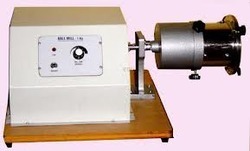
Ball Mill Motor Driven
Price 11400 INR
Minimum Order Quantity : 2 Pieces
Theory : Other, Used for grinding samples into powder using a motordriven system
Working Stage : Grinding chamber with motordriven operation
Dimensions : Appears to be a rectangular unit with a motor and mill attachment approximately 30 cm x 20 cm x 20 cm
Image Format : Not applicable to Ball Mill Motor Driven

Kymograph Pharmacy Equipment
Price 14500 INR / Piece
Minimum Order Quantity : 2 Pieces
Theory : Other, Used for recording changes in muscle contraction or other physiological responses onto a rotating drum covered with smoked paper.
Working Stage : Cylindrical metal drum with smoked paper
Dimensions : Approx. 530 x 210 x 450 mm (L x W x H)
Image Format : Analog graph on smoked paper
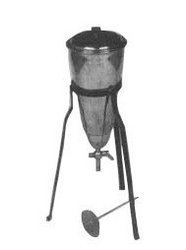
Conical Percolator
Price 1150 INR / Piece
Minimum Order Quantity : 1 Piece
Theory : Other, A conical percolator is specialized laboratory glassware, typically used to extract soluble components from solid substances by percolation method in pharmaceuticals, chemical analysis, and research labs.
Dimensions : Standard sizes such as 100ml, 250ml, 500ml, 1000ml, or custom sizes available upon request.

 Send Inquiry
Our Products
- RESEARCH MICROSCOPE
- LABORATORY INSTRUMENTS
- LABORATORY MICROSCOPE
- CHEMISRTY EQUIPMENTS
- OPTICAL BENCHES
- AUTOMATIC PROJECTORS
- HUMAN FIBRE MODELS
- BIOCHEMISTRY EQUIPMENTS
- BIOLOGY LAB EQUIPMENT
- DIGITAL THERMOMETER
- DIGITAL HYDROMETER
- ELECTRONICS ITEMS
- PHYSIOLOGY TESTS
- PHYSIC RESEARCH INSTRUMENTS
- SODA GLASSWARE
- BOROSILICATE GLASSWARE
- PHARMACY EQUIPMENTS & INSTRUMENTS
- Thermometer
- Microscope's Camera
- Microscope's software
- Histopathology
- Operating Microscopes
- Biotechnology Instruments
- Ophthalmic Equipment
- Molecular Biology
- D-Pharmacy Equipment
- Communication Lab Instruments
- Civil Engineering
- Chemistry
- Physics
- tuning fork
- Inverimental
- Hot Air Oven
- Mortuary Chamber

No.-3111/12, Cross Road No. 10, Kacha Bazar, Ambala Cantt - 133001, Haryana, India

Mr Anil Kumar Rana
(Proprietor)
Mobile :08045802246
 Send Inquiry
 Send SMS
 Call Me Free
Developed and Managed by Infocom Network Private Limited.
