
Call us now :08045802246
 Send Inquiry
 Send Inquiry
Newton Ring Apparatus
MOQ : 1 Piece
Newton Ring Apparatus Specification
- Accuracy
- 100 %
- Operate Method
- manual
- Feature
- Highly Efficient
- Usage
- Laboratory
Newton Ring Apparatus Trade Information
- Minimum Order Quantity
- 1 Piece
- Supply Ability
- 500 Pieces Per Year
- Delivery Time
- 1 Week
- Main Domestic Market
- All India
- Certifications
- CE CERTIFIED CO. NSIC MSME CERTIFIED ISO 9001:2015
About Newton Ring Apparatus
Newton Ring Apparatus
When Light is reflected between a spherical surface and an adjacent touching flat surface an interference pattern is formed This phenomenon is called Newtons Rings The apparatus required to view this interference is called Newtons Rings Apparatus
In Newtons Rings Apparatus the light from the Condenser lens incidents on the plane glass inclined at 45 degrees and gets reflected vertically downwards and falls on the combination of palno convex lens and plain glass Some portion of the light is reflected from the lower convex side of the lens and some portion of light is reflected from the upper side of the plain glass plate A phase difference is created between the two wave fronts that give rise to dark and bright concentric rings which are viewed through the microscope provided with a high quality Achromatic objective a Ramsdons eyepiece and a cross line graticule The diameter of the rings can be measured using the micrometer
Features of the Newtons Ring Microscope
Compact instrument with full arrangements for conducting Newtons Ring experiment
A standard Microscope unit with 30x magnification and rotatable cross line eye piece
Focusing of microscope is through Rack and Pinion
Longitudinal movement of 26 mm is done by rotating the drum provided which reads up to 0001cm
Complete with optical glass and convex lens inside a metal case
Provided with complete Sodium lamp assembly
Packed in a sturdy wooden box along with all standard accessories

Tell us about your requirement

Price:
Quantity
Select Unit
- 50
- 100
- 200
- 250
- 500
- 1000+
Additional detail
Mobile number
Email

More Products in Communication Lab Instruments Category
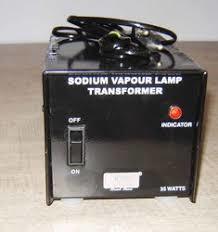
Sodium Vapor Lamp Transformer 35 watts.
Price 2580.00 INR
Minimum Order Quantity : 1 Unit
Usage : Industrial or laboratory use for sodium vapor lamps
Feature : Switch control for ON/OFF functionality
Accuracy : High
Weight : Lightweight portable (Weight not specified)
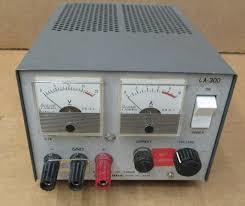
DC Regulated Power Supply
Price 3300 INR
Minimum Order Quantity : 1 Unit
Usage : Laboratory Educational Industrial
Feature : Dual meters for voltage and current measurement
Accuracy : 0.5%
Weight : 3 kg
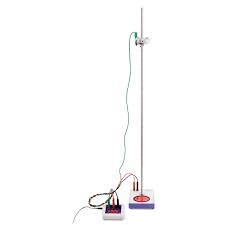
Free Fall Apparatus
Usage : Educational purposes
Feature : Measurement of free fall time
Accuracy : 0.01 seconds
Weight : 5 kg

Babinet Compensator
Usage : Interferometry polarization studies
Feature : Phase retardation adjustment
Accuracy : High precision
Weight : Lightweight portable

 Send Inquiry
Our Products
- RESEARCH MICROSCOPE
- LABORATORY INSTRUMENTS
- LABORATORY MICROSCOPE
- CHEMISRTY EQUIPMENTS
- OPTICAL BENCHES
- AUTOMATIC PROJECTORS
- HUMAN FIBRE MODELS
- BIOCHEMISTRY EQUIPMENTS
- BIOLOGY LAB EQUIPMENT
- DIGITAL THERMOMETER
- DIGITAL HYDROMETER
- ELECTRONICS ITEMS
- PHYSIOLOGY TESTS
- PHYSIC RESEARCH INSTRUMENTS
- SODA GLASSWARE
- BOROSILICATE GLASSWARE
- PHARMACY EQUIPMENTS & INSTRUMENTS
- Thermometer
- Microscope's Camera
- Microscope's software
- Histopathology
- Operating Microscopes
- Biotechnology Instruments
- Ophthalmic Equipment
- Molecular Biology
- D-Pharmacy Equipment
- Communication Lab Instruments
- Civil Engineering
- Chemistry
- Physics
- tuning fork
- Inverimental
- Hot Air Oven
- Mortuary Chamber

No.-3111/12, Cross Road No. 10, Kacha Bazar, Ambala Cantt - 133001, Haryana, India

Mr Anil Kumar Rana
(Proprietor)
Mobile :08045802246
 Send Inquiry
 Send SMS
Developed and Managed by Infocom Network Private Limited.
