
Call us now :08045802246
 Send Inquiry
 Send Inquiry
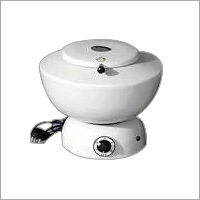
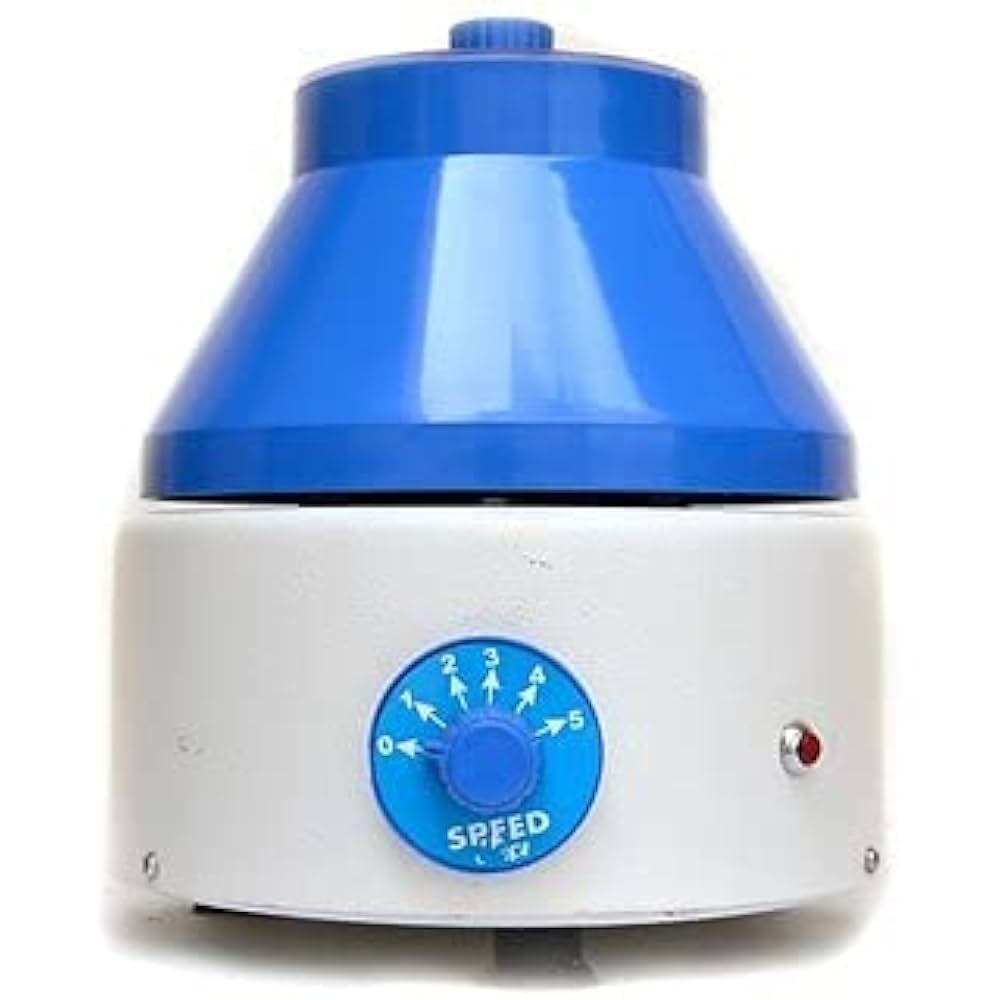
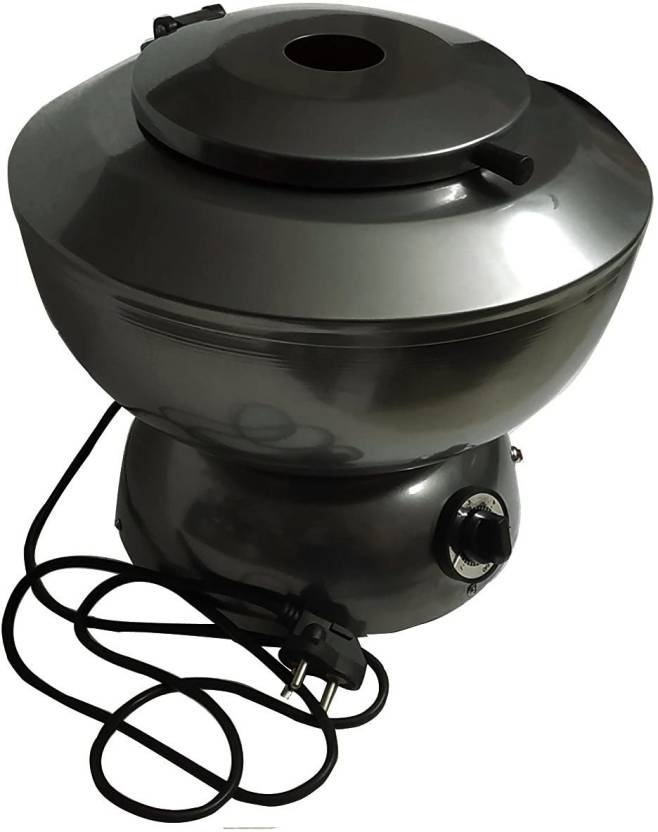
Industrial Centrifuge Machine
MOQ : 1 Piece
Industrial Centrifuge Machine Specification
- Core Components
- Motor Bowl
- Warranty
- 1 Year
- Measurement Range
- Variable speed control
- Operate Method
- manual
- Temperature Range
- Ambient Celsius (oC)
- Weight
- 15-200 Kilograms (kg)
- Frequency
- 50 Hz Hertz (HZ)
- Product Type
- laboratory type
- Accuracy
- High mm
- Power Source
- Electric
- Capacity
- 5 liters Ltr
- Feature
- High-speed rotation
- Automation Grade
- Semi-Automatic
- Power
- 0.7 to 37 kw Watt (w)
- Voltage
- 220V Volt (v)
- Material
- stainless steel
- Model No
- ICM-500
- Equipment Materials
- Stainless Steel and Plastic
- Type
- Tabletop
- Usage
- Liquid separation
- Display Type
- Analog Dial
- Dimension (L*W*H)
- 30cm x 30cm x 40cm Centimeter (cm)
Industrial Centrifuge Machine Trade Information
- Minimum Order Quantity
- 1 Piece
- Supply Ability
- 1 Piece Per Month
- Delivery Time
- 1 Week
- Main Domestic Market
- West India, Lakshadweep, Mizoram, Meghalaya, Manipur, Andhra Pradesh, Bihar, Assam, Delhi, Arunachal Pradesh, Himachal Pradesh, Jammu and Kashmir, Madhya Pradesh, Maharashtra, Nagaland, All India, South India, Central India, North India, East India, Gujarat, Karnataka, Kerala, Chandigarh, Jharkhand, Odisha, Punjab, Chhattisgarh, Haryana, Rajasthan, Sikkim, Tamil Nadu, Telangana, Tripura, Uttar Pradesh, Uttarakhand, West Bengal
- Certifications
- CE CERTIFIED CO. NSIC MSME CERTIFIED ISO 9001: 2015
About Industrial Centrifuge Machine
An industrial centrifuge machine uses high-speed rotation and centrifugal force to separate components of different densities within a liquid or mixture, such as separating solids from liquids, or liquids from other liquids. Consisting of a rotating drum or bowl, the mixture is introduced and spun, with denser substances forced outward while less dense ones move inward. These machines are critical in many sectors like food processing, wastewater treatment, and chemical manufacturing for enhancing product quality, efficiency, and cost reduction.
How it Works
- The machine's primary component is a rotor or drum that spins at high speeds.
- This high-speed rotation generates centrifugal force, which acts to push particles outward from the center of rotation.
- Due to their greater density, heavier particles or liquids are forced to the outer walls of the container, while lighter components move towards the center.
- The separated components can then be collected, allowing for the extraction of valuable substances or removal of impurities from the mixture.
- Key Components
- Rotor/Bowl: The rotating container where the mixture is placed and spun.
- Motor: Provides the power to spin the rotor at high speeds.
- Collection Systems: Mechanisms to collect the separated solid or liquid phases.
-
-
Common Types and Applications
- Separate solids from liquids and can also separate two liquid phases, used in oil refining and mineral processing.
- Used for separating fine solids from liquids or clarifying liquids in food processing and biotechnology.
- Often used for dewatering sludge in wastewater treatment plants, reducing its volume.
- Suitable for separating solids from liquids or liquids from liquids in various industries.
. -
-
Industries That Use Them
- Pharmaceuticals: For isolating active ingredients and purifying compounds.
- Food and Beverage: Separating fats from milk, clarifying juices, and processing oils like palm or olive oil.
- Chemical Manufacturing: For separating precipitates, clarifying solutions, and producing various chemicals.
- Wastewater Treatment: Dewatering sludge from sewage and industrial effluent.
- Oil and Gas: Separating water and solids during the refining of crude oil.
- Pharmaceuticals: For isolating active ingredients and purifying compounds.
- Used for separating fine solids from liquids or clarifying liquids in food processing and biotechnology.
- Often used for dewatering sludge in wastewater treatment plants, reducing its volume.
- Suitable for separating solids from liquids or liquids from liquids in various industries.
-
- Rotor/Bowl: The rotating container where the mixture is placed and spun.
Tell us about your requirement

Price:
Quantity
Select Unit
- 50
- 100
- 200
- 250
- 500
- 1000+
Additional detail
Mobile number
Email

More Products in CHEMISRTY EQUIPMENTS Category
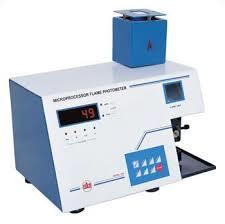
Compressor Unit For Flame Photometer
Price 29000 INR / Piece
Minimum Order Quantity : 1 Piece
Accuracy : High accuracy for flame photometric measurements
Usage : Used for flame photometric analysis in laboratories
Feature : Integrated compressor for flame photometry functionality
Dimension (L*W*H) : Compact design dimensions not specified
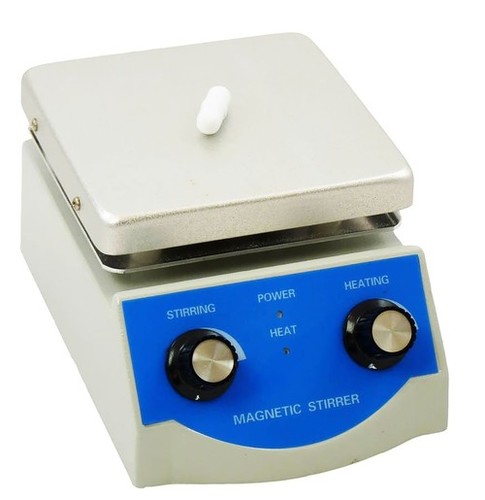
Magnetic Stirrer
Price 1550 INR / Piece
Minimum Order Quantity : 1 Piece
Accuracy : High Precision
Usage : Laboratory Mixing and Heating
Feature : Variable Speed Heating Capability
Dimension (L*W*H) : 180mm x 220mm x 120mm
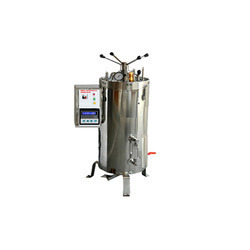
Autoclave Vertical Radial Looking
Price 38000 INR / Piece
Minimum Order Quantity : 1 Piece
Accuracy : 0.5C
Usage : Sterilization in Laboratories Hospitals
Feature : Easy Operation High Durability
Dimension (L*W*H) : 400 x 400 x 800 mm
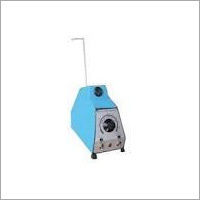
Boiling Point App. Electrical
Price 2900 INR / Piece
Minimum Order Quantity : 1 Piece
Accuracy : 1C
Usage : Laboratory Testing
Feature : High Accuracy, Fast Heating
Dimension (L*W*H) : 350 x 250 x 220 mm

 Send Inquiry
Our Products
- RESEARCH MICROSCOPE
- LABORATORY INSTRUMENTS
- LABORATORY MICROSCOPE
- CHEMISRTY EQUIPMENTS
- OPTICAL BENCHES
- AUTOMATIC PROJECTORS
- HUMAN FIBRE MODELS
- BIOCHEMISTRY EQUIPMENTS
- BIOLOGY LAB EQUIPMENT
- DIGITAL THERMOMETER
- DIGITAL HYDROMETER
- ELECTRONICS ITEMS
- PHYSIOLOGY TESTS
- PHYSIC RESEARCH INSTRUMENTS
- SODA GLASSWARE
- BOROSILICATE GLASSWARE
- PHARMACY EQUIPMENTS & INSTRUMENTS
- Thermometer
- Microscope's Camera
- Microscope's software
- Histopathology
- Operating Microscopes
- Biotechnology Instruments
- Ophthalmic Equipment
- Molecular Biology
- D-Pharmacy Equipment
- Communication Lab Instruments
- Civil Engineering
- Chemistry
- Physics
- tuning fork
- Inverimental
- Hot Air Oven
- Mortuary Chamber

No.-3111/12, Cross Road No. 10, Kacha Bazar, Ambala Cantt - 133001, Haryana, India

Mr Anil Kumar Rana
(Proprietor)
Mobile :08045802246
 Send Inquiry
 Send SMS
Developed and Managed by Infocom Network Private Limited.
